MATERIAL COMPARISON / BUYER GUIDE
PET vs PP ice cream spoons should be compared by the actual finished product, not by resin name alone. PP is a commonly used option for disposable spoon designs; PET can be considered when a specific product model is offered and independently verified. Ask suppliers to identify the exact resin, dimensions, food-contact documentation and intended service conditions before comparing quotations.
Why spoon material matters
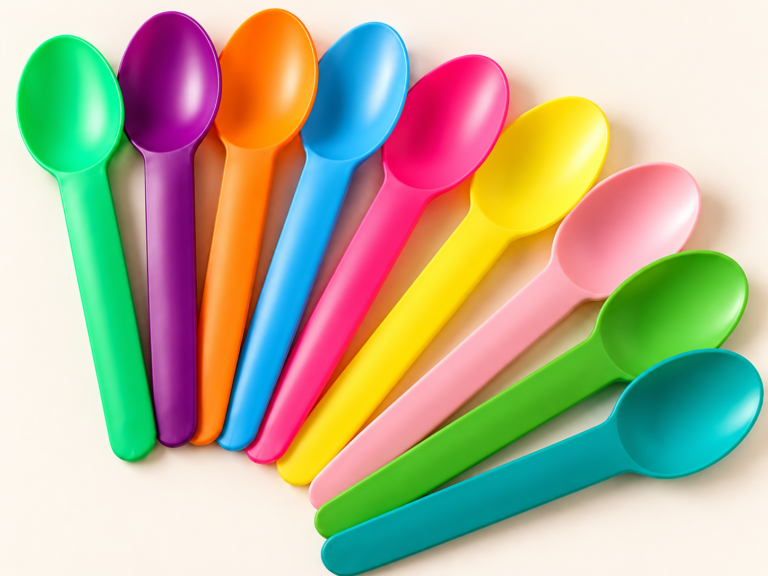
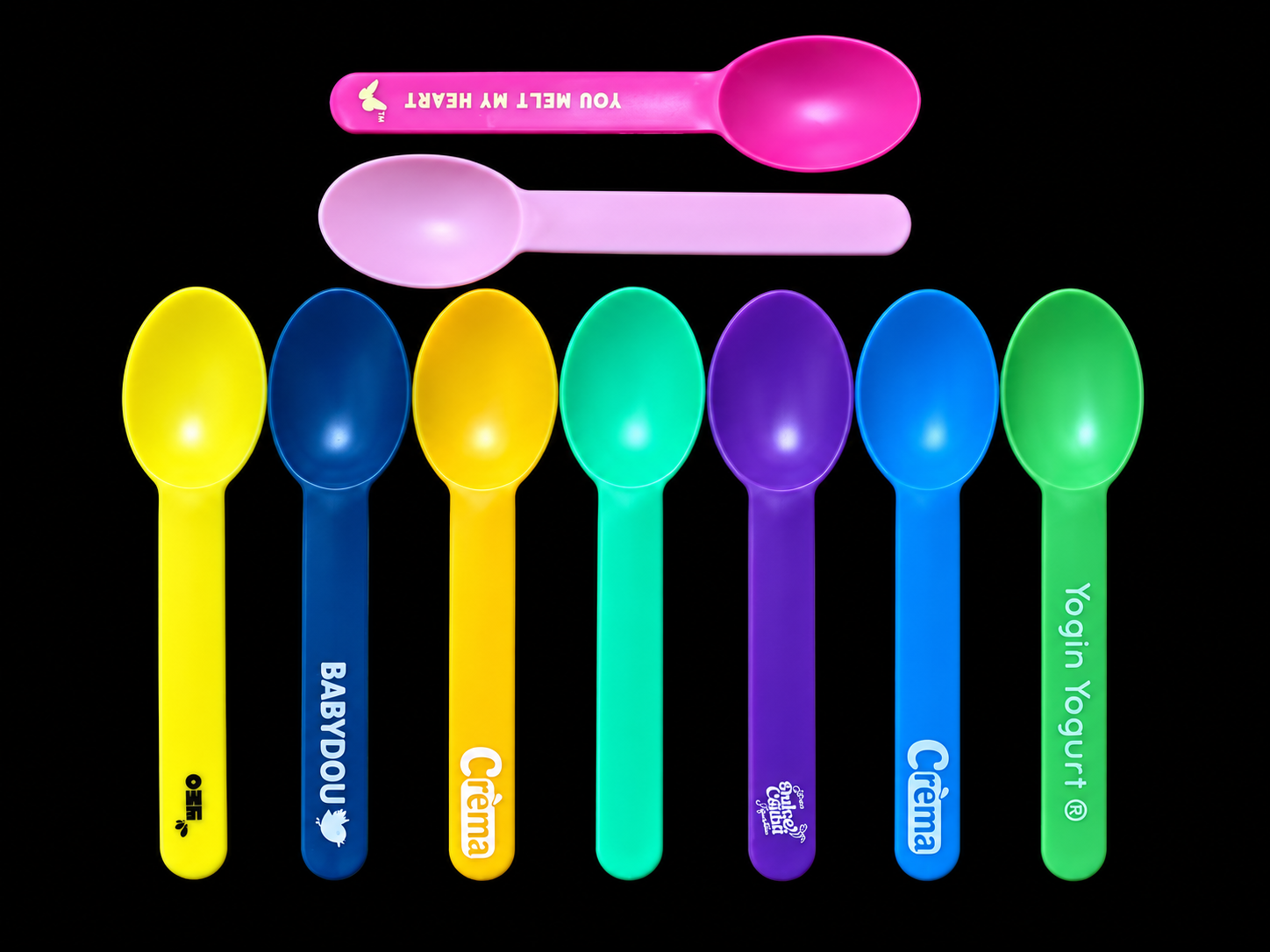
An ice cream spoon looks simple, but the buying decision involves more than price. A short, rigid-looking sample can behave differently from a longer spoon when users scoop firm frozen desserts. The bowl shape, edge finish, handle profile, pigment and wall thickness all influence the experience. For private-label orders, these details also affect appearance and repeatability.
PET vs PP ice cream spoons: a practical comparison
PP (polypropylene) and PET (polyethylene terephthalate) are different thermoplastic families. General packaging properties are useful background, but they do not establish the performance of a specific spoon. Buyers should request the supplier’s material declaration and samples before treating any specification as confirmed.
What to test before placing an order
Test the actual spoon with the desserts and cups it will accompany. Check scooping resistance with firm and softened ice cream; inspect the bowl edge for burrs; assess handle flex, breakage and comfort; confirm that spoon length reaches the bottom of the selected cup without making the handle awkward to hold. Repeat tests with several pieces from the same proposed model, not a single showcase sample.
Food-contact compliance and documentation
A food-contact claim must relate to the finished spoon, including pigments and additives, and the market in which it will be sold. In the EU, plastic food-contact materials are covered by Regulation (EU) No 10/2011 and associated requirements. Ask for appropriate documentation and test reports for the exact product and intended conditions of use. Never assume that the words “food grade” or “recyclable” alone prove regulatory compliance.
Color, branding and packaging choices
Specify the desired shade using an approved sample or color reference, and confirm whether printing, embossing or other branding is available for that exact mold. Ask whether individually wrapped and bulk-packed versions use the same spoon model. Packaging changes unit handling and carton volume; it may also change the actual quoted price.
Questions to send to a supplier
For a useful quotation, state the target resin, length, color, spoon style, expected order volume, destination market and desired packing method. Ask for model drawings, weight per piece, carton quantity, sample availability, tooling or artwork charges if any, production lead time and shipment terms. Where PET is requested, verify that a real PET spoon model is available rather than assuming it is interchangeable with PP.
Frequently asked questions
Is PET always better than PP for ice cream spoons? No. Suitability depends on the actual design and its tested performance.
Can PP ice cream spoons be customized? Options vary by mold and supplier; confirm color, finish, branding and MOQ.
Can all plastic spoons be recycled? Collection and acceptance depend on local systems, size and contamination; do not promise universal recyclability.
Next step for wholesale buyers
Share your target spoon dimensions, material preference, color, packing format and delivery market. Jorange Packaging can discuss suitable product options and the documents required for your purchasing review.
Request a Wholesale Quote →