Single wall vs double wall paper cups: Single-wall paper cups are a practical choice when cost, compact storage and flexible serving matter most. Double-wall paper cups add an outer layer that generally improves hand comfort with hot beverages and may reduce the need for a separate sleeve. The best choice is not simply the cup with the lowest unit price; it is the cup that works with your drinks, lids, service routine and total packaging budget.
For café owners, coffee chains and packaging distributors researching single wall vs double wall paper cups, the differences become especially important when purchasing thousands of units. Here is how to compare both constructions before placing a wholesale order.
What Is the Difference Between Single-Wall and Double-Wall Paper Cups?
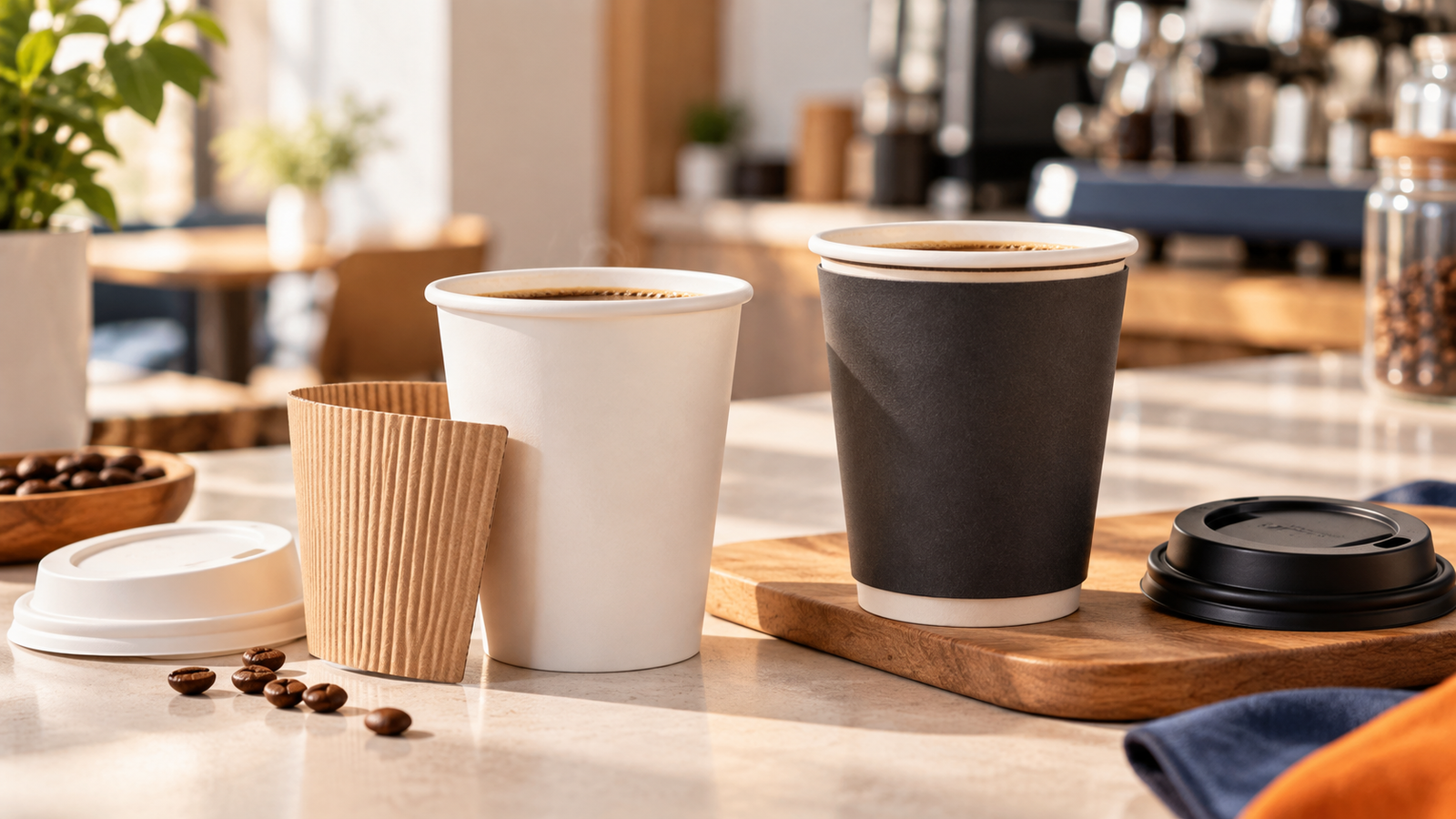
A single-wall paper cup has one main paperboard wall, typically with a suitable internal barrier to hold liquids. Its relatively simple construction makes it a familiar option for takeaway coffee, tea and other beverages. However, the outside can become uncomfortable to hold when the drink is hot. Some operators therefore add a separate corrugated sleeve.
A double-wall paper cup has an additional outer paper layer. Depending on the construction, the layers create an insulating space that reduces heat transfer to the hand. Many customers can handle a properly specified double-wall hot cup without a separate sleeve, although performance varies by design and drink temperature.
Neither name alone confirms the cup’s exact temperature suitability, lining or lid compatibility. Ask for specifications for the actual product you intend to purchase.
Single Wall vs Double Wall Paper Cups: Quick Comparison
| Buying factor | Single-wall paper cups | Double-wall paper cups |
|---|---|---|
| Construction | One primary paperboard wall | Additional outer paper layer |
| Hand comfort with hot drinks | May need a sleeve | Generally more insulated |
| Cup-only unit cost | Often lower | Often higher |
| Sleeve requirement | Depends on drink temperature and service | Often unnecessary, but test first |
| Stock management | Cup plus sleeve if needed | Can simplify the serving setup |
| Branding | Smooth print surface; sleeve may cover artwork | Outer wall offers a separate branding surface |
| Typical fit | Budget-conscious cafés, mixed service, sampling | Hot takeaway drinks, delivery, premium coffee service |
These are common differences, not guaranteed performance ratings. Always evaluate samples under your own serving conditions.
1. Heat and Hand Comfort: Start With the Actual Drink
Imagine two customers ordering the same hot coffee. One drinks it at a table; the other carries it to work for 15 minutes. Their expectations of cup comfort may be very different.
With a single-wall cup, heat passes more readily through the sidewall. A correctly sized sleeve can improve grip and handling comfort. With a double-wall cup, the extra outer layer provides some built-in insulation, which may be useful when customers hold a hot drink for longer.
For a practical comparison, test both cups using the beverages, lids and fill levels you actually serve. Check the exterior temperature and comfort shortly after filling and again after a realistic carrying period. Use safe handling procedures when testing hot liquids.
Do not assume every double-wall cup is suitable for every hot drink. Construction, lining, cup size and serving temperature still need to be checked.
2. Compare the Cost of a Complete Drink, Not Just the Cup
A single-wall cup may have a lower quoted unit price, but that can be misleading if most customers also need a sleeve. The full packaging cost of a takeaway drink may include:
- Cup and compatible lid
- Sleeve, if needed
- Printing or branded outer wrap
- Freight and carton packing
- Storage space and handling
- Allowance for damaged or incorrectly matched components
For a busy café, a double-wall format could reduce the need to purchase, store and apply sleeves. In other operations, single-wall cups plus sleeves may remain the more economical solution, especially where sleeves are used only for selected drinks.
Compare quotes on the same cup volume, lid system, branding requirements and destination. A cheaper cup is not necessarily a cheaper finished serving.
3. Cup Sizes and Lids: Why Ounces Are Not Enough
Cup sizes such as 8oz, 12oz and 16oz are useful shopping labels, but the actual capacity and dimensions vary by product family. Ordering a lid by the ounce label alone can lead to a poor fit.
For example, Jorange Pack’s published paper cup reference range includes:
| Reference cup | Listed capacity | Listed top rim diameter |
|---|---|---|
| Single-wall 8oz | 280 ml | 80 mm |
| Double-wall 8oz | 290 ml | 80 mm |
| Single-wall 12oz | 400 ml | 89 mm |
| Double-wall 12oz | 400 ml | 89 mm |
| Single-wall 16oz | 520 ml | 89 mm |
| Double-wall 16oz | 520 ml | 89 mm |
These are examples from specific Jorange Pack reference products, not universal dimensions for every supplier. A matching nominal rim measurement also does not guarantee that two lid designs will seal equally well.
Before ordering, confirm the chosen cup SKU, actual rim profile, approved lid model, target fill volume and physical fit. Test for leakage while carrying the cup under normal service conditions.
Explore the current options on our paper cups product page.
4. Custom Printing and Brand Presentation
Cup structure affects how your logo appears in the customer’s hand.
A single-wall cup offers a straightforward printed surface, but a separate sleeve may hide part of the artwork. That can be an advantage if the sleeve is used for seasonal campaigns or small batches of changing messages.
A double-wall cup may provide a more substantial outer surface for a consistent brand look. Depending on the selected construction, textured and specialty finishes can also be considered. Printing feasibility, artwork area, colors and minimum order quantities still depend on the exact cup model and decoration process.
Before approval, request an artwork template and examine a sample at actual size. Pay special attention to small lettering, the seam area, color expectations and the logo’s visibility when the lid is fitted.
5. Which Cup Works Best for Different Businesses?
Independent coffee shops: Consider single-wall cups if you already use sleeves efficiently and have a mixed menu. Compare double-wall samples for hot takeaway drinks and customers who carry drinks longer.
Coffee chains and busy takeaway counters: Check how quickly staff can assemble each complete drink. A double-wall format may simplify service when most drinks need extra hand insulation.
Hotels, offices and events: Single-wall cups may work well for controlled serving conditions, tasting portions and cost-sensitive high-volume use, provided the drink temperature and handling needs are appropriate.
Packaging wholesalers and distributors: Offer buyers clear specifications for both structures. Rim diameter, carton quantity, lid compatibility and repeat-order consistency are often more useful than broad claims about which type is “premium.”
Brand-led cafés: Compare how the artwork looks with a separate sleeve versus a full printed outer wall. The best option depends on the customer experience you want to create.
6. Test Samples Before Placing a Bulk Order
Ask your supplier for samples of the exact cup and lid combination. Then run a simple service test:
- Fill each cup with the beverage at your normal service temperature and fill level.
- Check the outside surface and grip comfort under safe handling conditions.
- Attach the intended lid and inspect the fit around the full rim.
- Carry the cup using your standard takeaway process and watch for movement or drips.
- Check for softening, seam issues or other visible defects after a realistic holding period.
- Compare stacking, storage, sleeve use and staff handling.
- Review the printed sample or artwork proof before approving any custom batch.
Document the results alongside the exact sample codes. That makes repeat orders easier and reduces the chance of comparing different cup structures by mistake.
7. Questions to Ask When Requesting a Paper Cup Quote
To receive a useful wholesale quotation, include:
- Single-wall, double-wall or another preferred structure
- Nominal size and required capacity in milliliters
- Beverage type and intended filling temperature
- Rim diameter and whether you need compatible lids
- Estimated quantity for each size and style
- Logo artwork and preferred printing or finishing effect
- Destination country, sample requirements and requested delivery timing
Jorange Pack lists a starting minimum of 5,000 pieces for standard paper cups on its product page. Custom printing, special materials and selected finishes may have different requirements, so confirm the minimum for your specific order rather than assuming one MOQ applies to everything.
Frequently Asked Questions
Are double-wall paper cups always better for hot coffee?
Not always. They generally provide better sidewall insulation than comparable single-wall designs, but a suitable single-wall cup with a sleeve may be practical and cost-effective. Test the actual drink temperature and handling conditions.
Can a single-wall paper cup be used for hot drinks?
Yes, if that particular product is specified for the intended hot-drink use. A sleeve may be needed for customer comfort. Do not assume that a cup designed for cold beverages is automatically suitable for hot filling.
Do 12oz and 16oz paper cups use the same lids?
Sometimes. Certain ranges share a nominal rim diameter, but cup shape and rim profile vary. Always confirm the matching lid SKU and fit with physical samples.
Are double-wall paper cups recyclable?
Do not assume recyclability based on the number of paper layers. Barrier coatings, materials and local collection rules matter. Request product-specific material information and check the recycling system in the destination market before making environmental claims.
Which paper cup style is best for custom logo printing?
Both can support branded designs when the selected construction and printing process allow it. Choose based on printable area, finish, order size and whether a sleeve will cover the artwork.
Final Recommendation: Buy for Your Serving Conditions
Choose single-wall paper cups when straightforward construction, cost control and flexibility are priorities. Choose double-wall paper cups when built-in insulation and an easy-to-handle hot-drink format justify the added cup cost.
Before placing a bulk order, compare complete serving costs, confirm the lid fit and test samples under realistic conditions. That will give you a more dependable answer than relying on the words “single wall” or “double wall” alone.
Jorange Pack offers a range of paper cup styles for cafés, beverage brands and wholesale packaging buyers. If you are planning a custom or bulk order, send us your specifications for a quotation.