Ice Cream Spoon Materials: PP vs CPLA vs Wood
Ice Cream Spoon Material Guide
Compare PP, CPLA and wooden spoon options before selecting utensils for ice cream shops, dessert brands or distributors.
For ice cream chains and dessert distributors, a small spoon influences how guests experience a frozen dessert. Material choice can affect feel, appearance, packaging, cleaning requirements, disposal claims and procurement costs.
1. Ice Cream Spoon Materials at a Glance
| Material | Typical characteristics | Buyer verification |
|---|---|---|
| PP (polypropylene) | Plastic material available in many colors and molded shapes | Intended use, strength, reuse claims, food-contact documentation and local rules |
| CPLA (crystallized polylactic acid) | Bio-based plastic formulation used in selected rigid utensils | Exact formulation, performance, certified compostability conditions and legal restrictions |
| Wood | Natural-looking material with its own surface feel | Finish, splinters, odor, moisture handling and applicable food-contact requirements |
The table is a selection overview, not a claim that any specific material is automatically approved, reusable, biodegradable or compostable in a destination market.
2. PP Ice Cream Spoons: When Might They Be Appropriate?
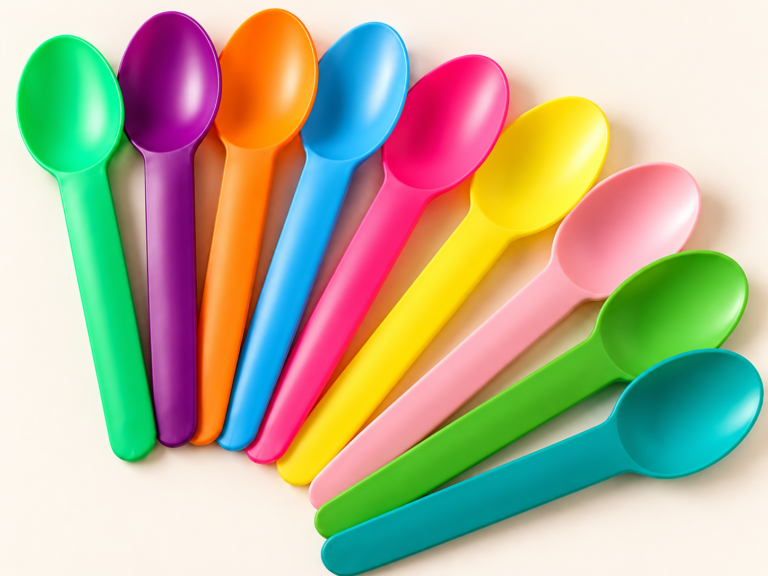
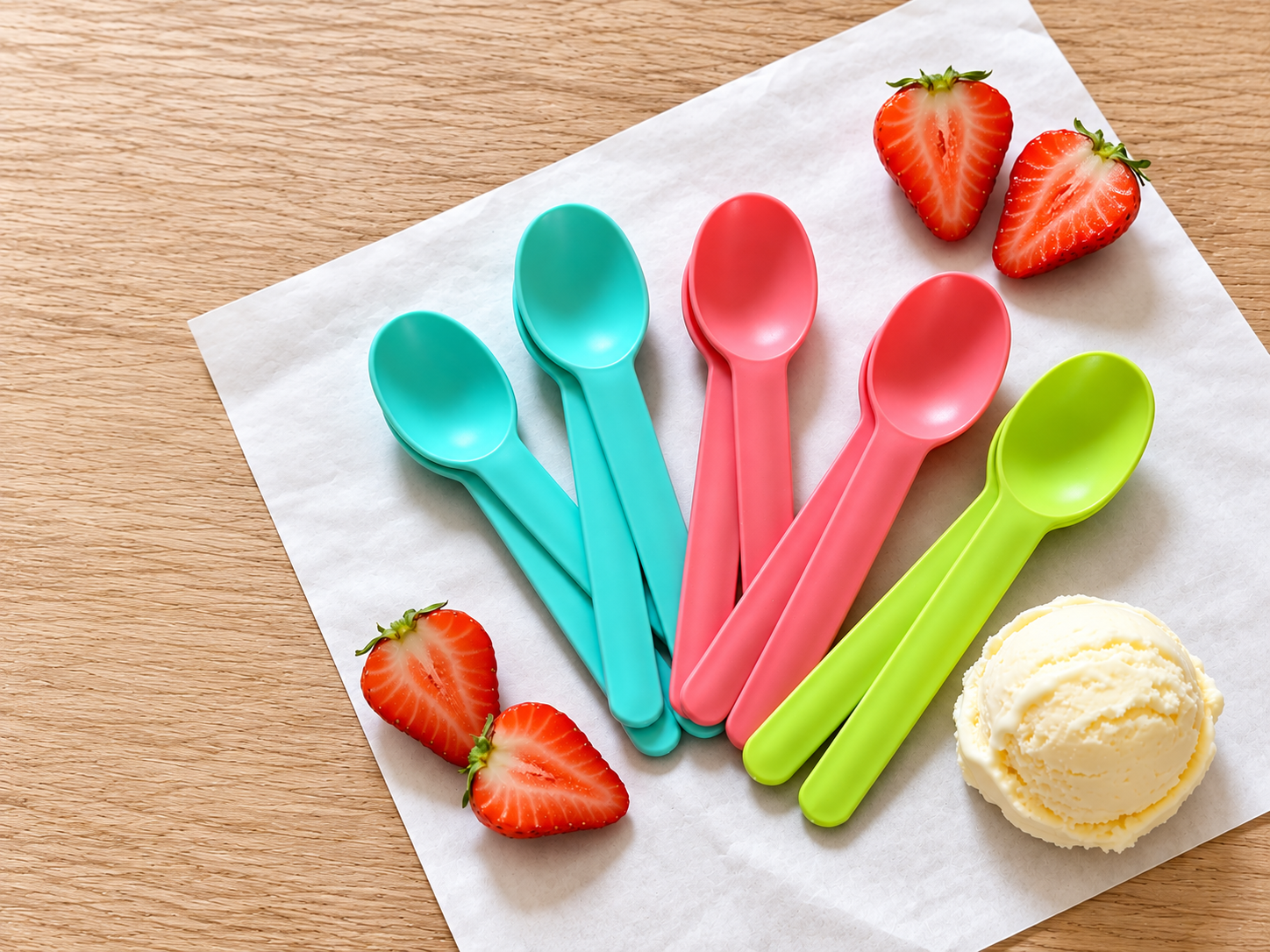
PP offers flexibility in color and shape for specified foodservice uses. If a buyer requests a reusable PP ice cream spoon, that claim should relate to the actual finished product and the cleaning and reuse conditions it has been assessed for—not just the resin name.
Consider spoon bowl depth, handle thickness, edge smoothness and performance when serving firm frozen desserts. Also ask whether the intended destination restricts particular plastic utensils.
3. CPLA Ice Cream Spoons: What Does “Compostable” Actually Mean?
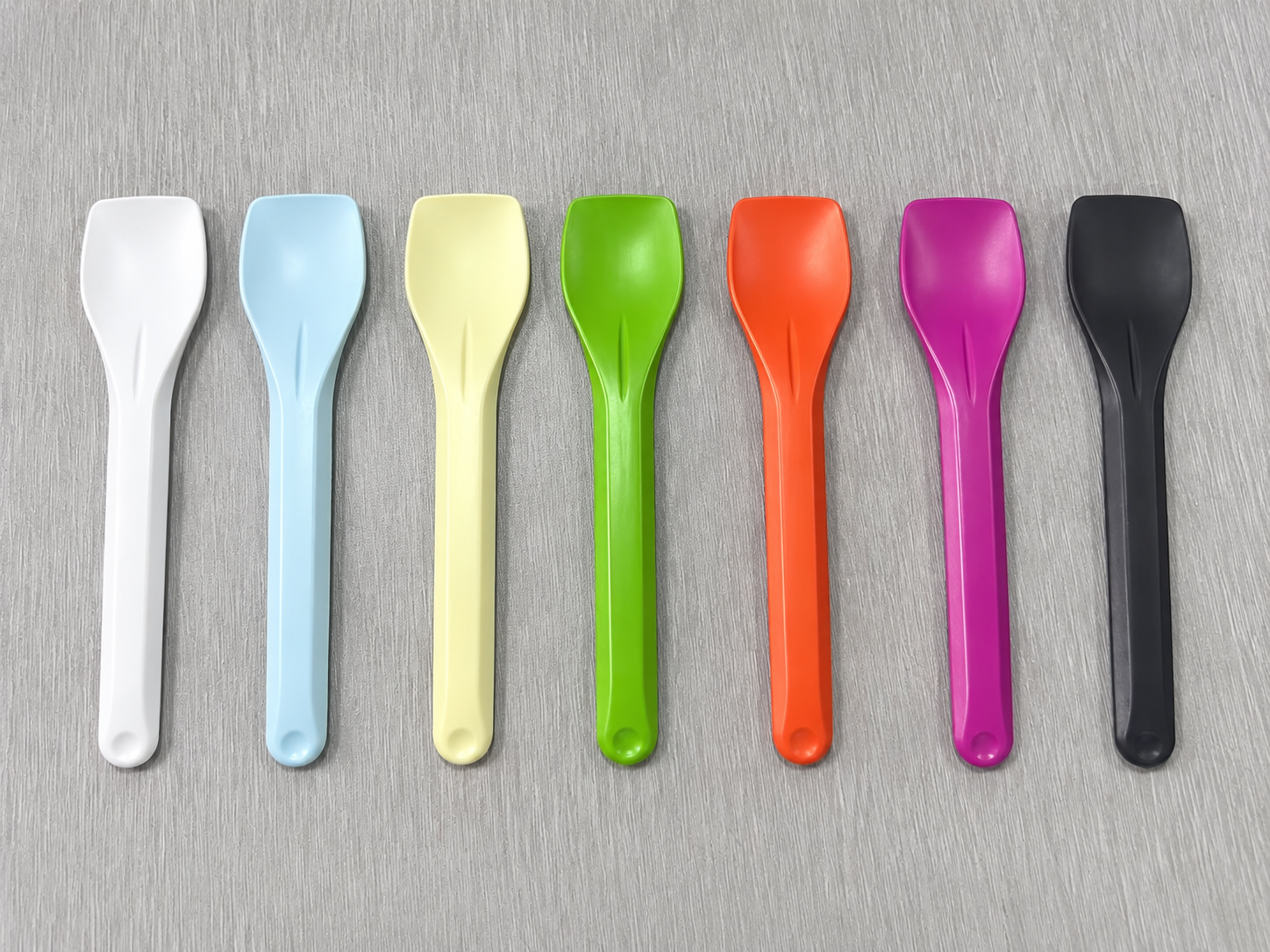
CPLA is often discussed as a plant-derived alternative in foodservice utensils, but composition alone does not establish that a finished spoon is compostable under real disposal conditions. If compostability is central to your purchasing decision, request certification that applies to the product and its relevant composting environment, and confirm local collection and acceptance.
Important: Rules for plastic cutlery differ by country. For example, EU restrictions on certain single-use plastic cutlery can apply regardless of marketing claims. Buyers importing into regulated markets should confirm the applicable classification before ordering—not assume that CPLA is exempt.
4. Wooden Ice Cream Spoons: Quality Questions
Wooden spoons can be a relevant option for some dessert formats. Request samples to assess:
- Surface smoothness and splinter risk
- Unwanted odor or taste transfer
- Handle comfort and bowl shape
- Moisture performance under intended use
- Individual wrapping and carton protection, if required
Natural appearance does not replace food-contact or product quality checks.
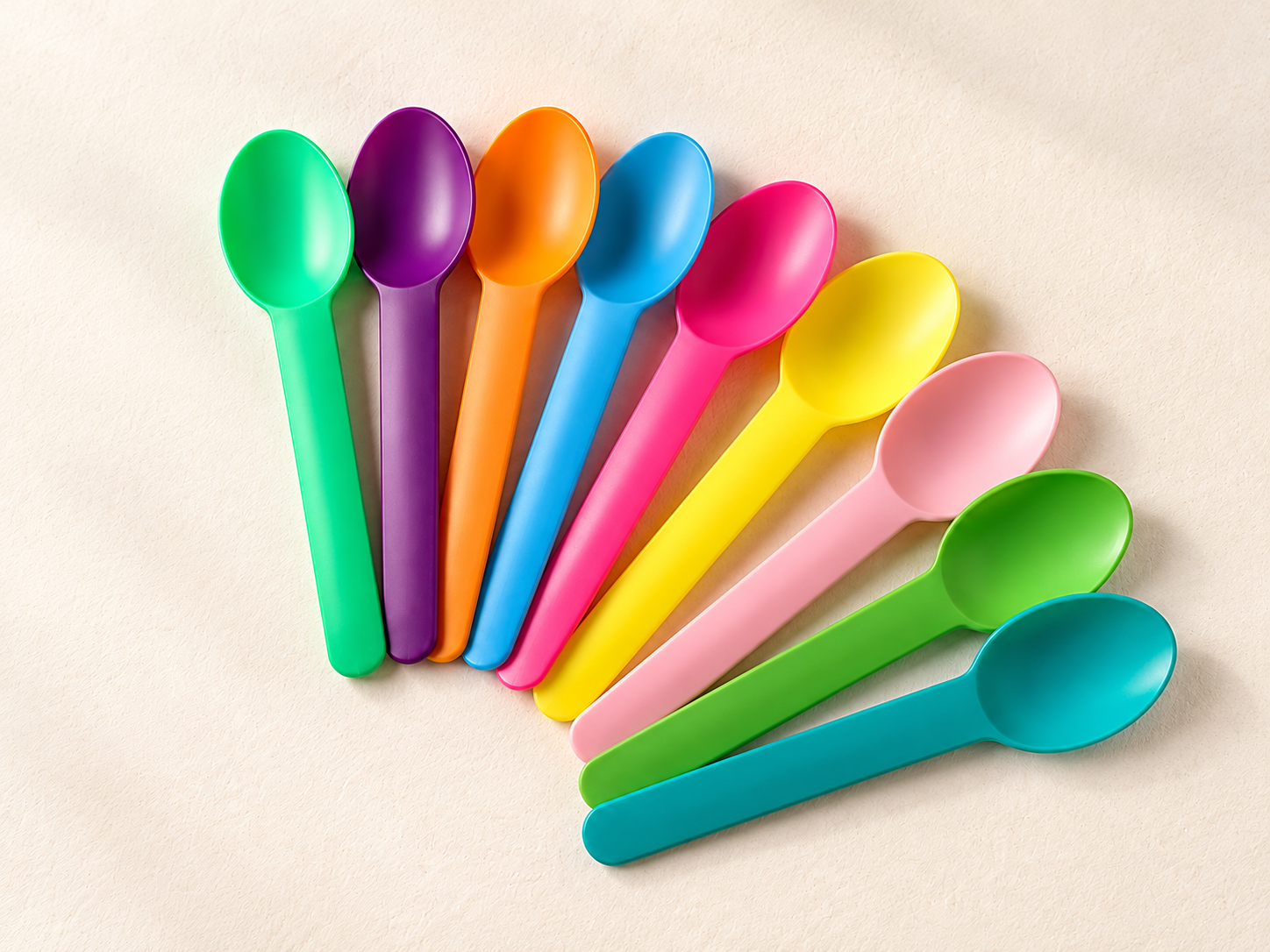
5. Choose the Right Shape and Size for the Dessert
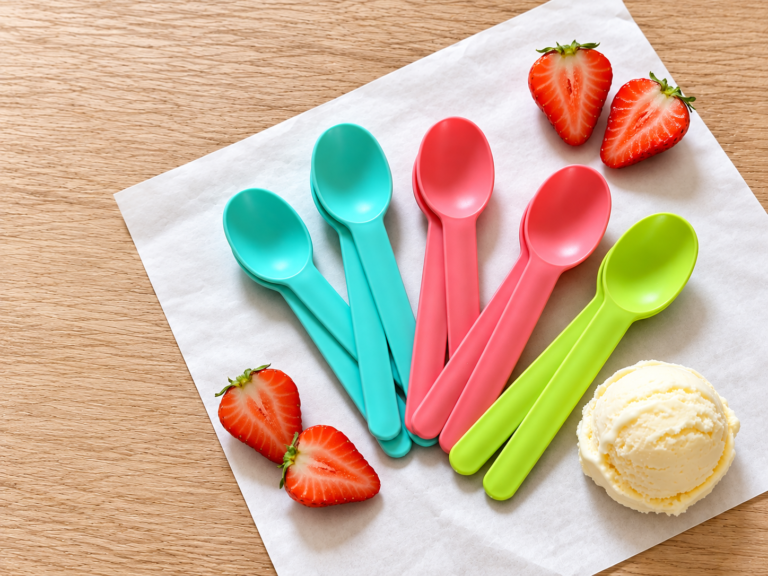
A short tasting spoon and a longer ice cream sundae spoon solve different tasks. First decide whether the utensil will be used for sample portions, a standard ice cream cup or a tall dessert container.
| Serving use | Design priorities | Check before ordering |
|---|---|---|
| Sampling and tasting | Compact size and comfortable edge | Single-serve portion and handling |
| Ice cream cups | Bowl strength and suitable reach | Cup depth and frozen-dessert firmness |
| Parfaits and tall desserts | Longer handle and balance | Access to the bottom of the container |
| Reusable service | Durability and cleaning suitability | Specific reuse instructions and substantiation |
6. Confirm Food-Contact Requirements for Your Market
Ask suppliers to identify the exact spoon material, pigments or additives when relevant, its intended food-contact use, and what documentation supports the finished item. The US FDA guidance on food-contact material components makes clear that authorizations must be assessed for specific substances and conditions of use.
Importers should independently confirm whether a single-use or compostability claim is lawful in the country where the spoons will be sold.
7. A Short Supplier Evaluation Checklist
- State the intended dessert, handling and disposal conditions.
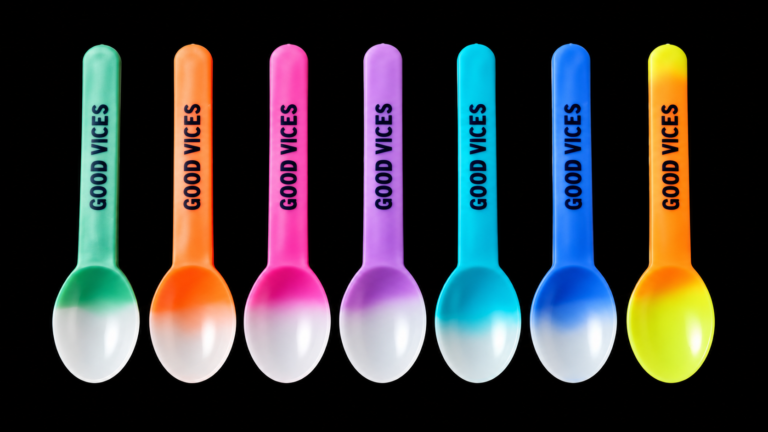
- Request actual length, bowl width, material and color.
- Ask for finished-product photos and samples.
- Confirm unit packing, wrapping and cartons.
- Request applicable material evidence and avoid unsupported environmental claims.
- Check the price for the exact SKU and order quantity.
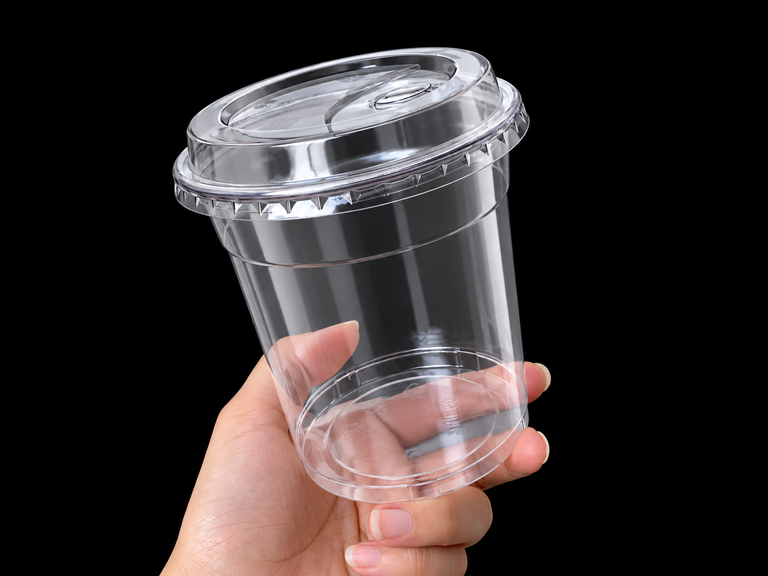
Explore our ice cream spoons collection and the related ice cream cups range.
Frequently Asked Questions About Ice Cream Spoon Materials
Are CPLA spoons always allowed where plastic cutlery is restricted?
No. The destination jurisdiction and legal definition of the finished item determine whether it is permitted. Verify the rules before purchase.
Are all PP ice cream spoons reusable?
No. Reusability depends on the finished spoon’s design and validated intended cleaning and use conditions.
Does “wooden” automatically mean food-contact compliant?
No. Buyers should review supplier documentation and sample quality for the actual product.
What material should I choose for a frozen dessert shop?
Begin with intended use, local regulations, serving format and sample performance. Then compare only products that meet those requirements.
Discuss Your Wholesale Packaging Needs
Jorange Packaging can help you review available product options, sizes, materials and packing requirements. Share your target quantity and destination so our team can discuss the appropriate next steps.
Request a Quote →Contact Our Team →Editorial note: This is a sourcing guide, not certification for any particular item. Confirm exact specifications, test results and destination-market requirements before bulk purchase.