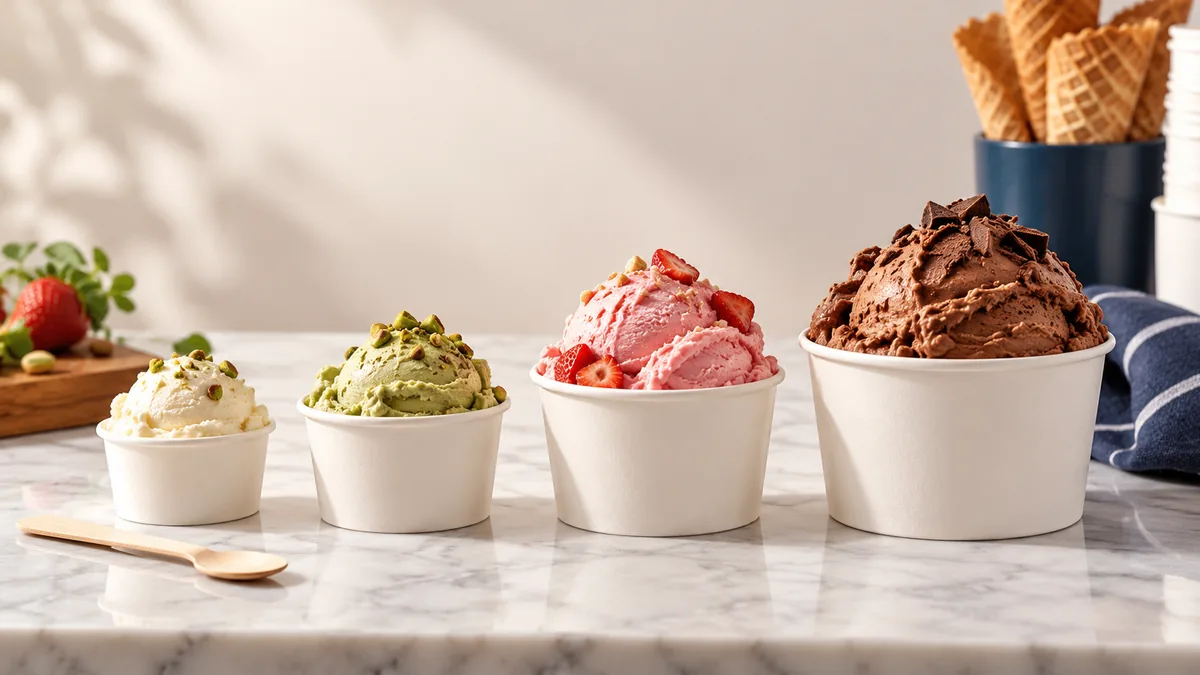
Ice cream cup sizes should be chosen around the dessert you actually serve—not around scoop count or an ounce label alone.
An 80 ml cup may be worth testing for sampling, while 120–160 ml formats can be candidates for compact servings and 240–380 ml formats may suit more elaborate portions. These are starting points for sample trials, not fixed scoop-to-cup conversions. Gelato density, serving technique, toppings and the amount of headspace you leave can change the result.
This practical guide helps gelato shops, frozen yogurt brands and wholesale packaging buyers shortlist paper dessert cups, test portions consistently, confirm lids and prepare an accurate custom-printing quotation.
Portion first
Test your actual serving weight and scoop shape before choosing the cup model.
Fit second
Confirm rim diameter, height, toppings and lid compatibility where needed.
1. Why Ice Cream Cup Sizes Cannot Be Selected by Scoop Count Alone
It is tempting to ask, “What size cup holds one scoop?” The difficulty is that a scoop is not a standardized unit. Two shops can serve dramatically different-looking portions using the same number of scoops. The product may be dense gelato, aerated ice cream, soft serve or frozen yogurt. Serving temperature and operator technique also affect how the dessert sits in the cup.
Moreover, the listed capacity of a paper cup is not necessarily its practical serving capacity. A supplier may describe a cup by nominal volume, model code or brim capacity. A real order needs room for a neat top, a spoon, and perhaps a lid. If you fill to the rim, the next step—adding fruit, sauce or crunchy toppings—can become messy.
For better decisions, record a typical portion by weight, place it in a physical cup sample, and check how it looks from both the customer and staff perspectives. A sample that looks generous on a web catalog may feel too tall, too wide or awkward for your actual menu.
Buyer takeaway: Treat ml and oz labels as useful shortlist information, then confirm serving volume, dimensions and fit by sample. Never assume 120 ml means one scoop or 240 ml means two scoops for every business.
2. Ice Cream Cup Sizes: Reference Dimensions for Six Paper Cup Models
The table below uses selected model specifications currently listed on the Jorange Packaging ice cream cups product page. The figures are reference dimensions for shortlisting. They are not a promise of usable fill volume, and availability must be reconfirmed for your chosen order.
| Model | Listed capacity | Top diameter | Base diameter | Height |
|---|---|---|---|---|
| H37 | 80 ml (2.5 oz ref.) | 71 mm | 60 mm | 37 mm |
| 120 | 120 ml (4 oz ref.) | 75 mm | 60 mm | 53 mm |
| 160 | 160 ml (5 oz ref.) | 85 mm | 73 mm | 50 mm |
| 240 | 240 ml (8 oz ref.) | 90 mm | 75 mm | 62 mm |
| 300 | 300 ml (10 oz ref.) | 96 mm | 79 mm | 65 mm |
| 380 | 380 ml (12 oz ref.) | 118 mm | 98 mm | 52 mm |
Source: Jorange Packaging paper ice cream cup specifications, checked October 2026. Oz figures are the supplier’s references rather than exact ml-to-US-fl-oz conversions. Final model, tolerances, stated capacity and lid availability require confirmation before purchase.
Notice that a 380 ml cup is substantially wider than many smaller models, but it is not necessarily the tallest. Diameter and height influence the presentation just as much as nominal volume. A wide, shallow cup can showcase toppings across the surface; a narrower cup may change how the same serving appears. Neither is automatically better.
3. Match Ice Cream Cup Sizes to Your Actual Menu
Start by grouping the desserts you sell, not by ordering every size available. Each category below is a hypothesis to test with your normal portioning process.
Small samples and tasting portions
Consider shortlisting an 80 ml or other compact format when you need a small trial serving. Test whether staff can scoop neatly, whether customers can hold the cup comfortably, and whether the dessert can be served without touching the rim excessively. If you provide a tasting spoon, check how it fits during pickup.
Compact takeaway servings
A 120 ml or 160 ml model can be worth evaluating for a smaller menu portion. The right choice depends on the serving’s actual mass, scoop shape and any sauce or inclusions. Compare the customer’s perception: does the cup look full enough, and can it be handled without spilling?
Gelato with multiple flavors or toppings
For larger single orders, investigate 240 ml or 300 ml options, then run a topping trial. Chocolate pieces, fruit, nuts and syrup need room. Keep the branded print area visible where possible; a large scoop stacked above a narrow cup can make the overall product unstable even if it technically fits.
Generous bowls and shareable desserts
Wider options such as a 380 ml model may give added visual space for desserts with several components. However, a bigger cup adds packaging volume and potentially unused space. Test it against the actual number of servings you expect to sell, not just a marketing photo of a lavish sundae.
| Menu scenario | Models to sample first | Main decision test |
|---|---|---|
| Sample or tasting | 80 ml | Portion appearance and spoon access |
| Compact serving | 120–160 ml | Repeatable fill level and comfort |
| Regular dessert with toppings | 240–300 ml | Headspace, toppings and customer handling |
| Wider plated-style takeaway | 380 ml | Stability, lid options and packaging cost |
These are editorial testing suggestions, not verified scoop counts, fixed serving recommendations or a guarantee that every model suits a given menu item.
4. A Six-Step Ice Cream Cup Size Trial Before Bulk Ordering
A short, repeatable portion test can prevent a costly mismatch after custom cups have been printed. Ask staff to use the same dessert, serving utensil and portion target across each candidate cup.
- Define the menu item. Write down the product type, serving temperature, portion target and toppings for each item you plan to sell.
- Request two or three model samples. Compare the actual upper diameter, base, height and rim profile—not only catalog capacity.
- Measure the real serving. Use your own standard portioning method; weigh several servings if you need consistent cost control.
- Leave practical headspace. Check whether toppings, takeaway movement and a possible lid require a lower fill level.
- Repeat with several staff members. A cup that works only when one experienced employee carefully portions it may be difficult to use at peak hours.
- Approve the whole set. Review printed graphics, lids where applicable, spoons, packing configuration and customer handover before authorizing the order.
Take photographs of each trial with a ruler or size label visible. Note spills, tipping, weak presentation and inconvenient spoon access. These records are more useful to a supplier than an instruction such as “medium ice cream cup.”
5. Lids, Toppings and Takeaway: Check More Than Cup Capacity
If the cup is for counter service without a lid, the presentation can be relatively flexible. For delivery, event catering or pre-portioned desserts, you also have to consider closures and movement. Start with the actual cup rim and ask which lid model, if any, is compatible. A matching nominal diameter does not guarantee a secure seal.
- Rim geometry: Check the profile and approved lid model against the exact selected cup.
- Topping clearance: Check that sauces, fruit and scoops do not press against the lid.
- Transport: Test filled containers under normal pickup and delivery motion.
- Condensation and surface moisture: Observe how the selected cup performs with your actual dessert and serving time.
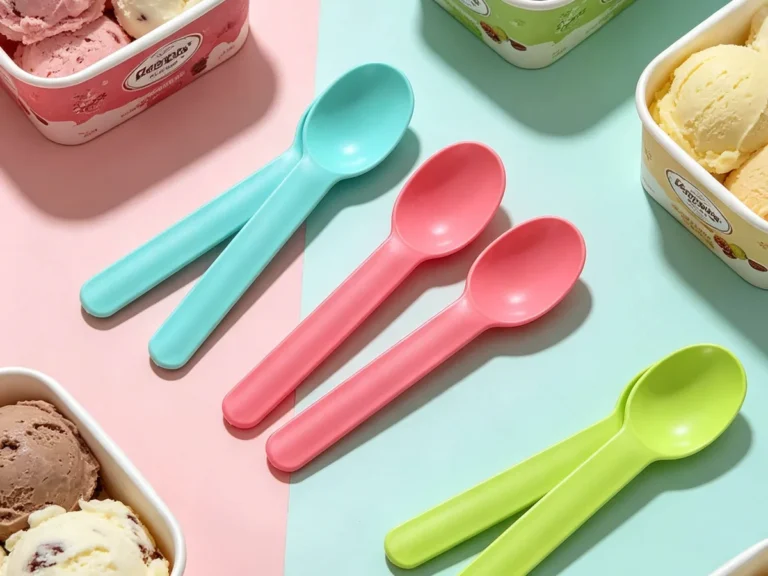
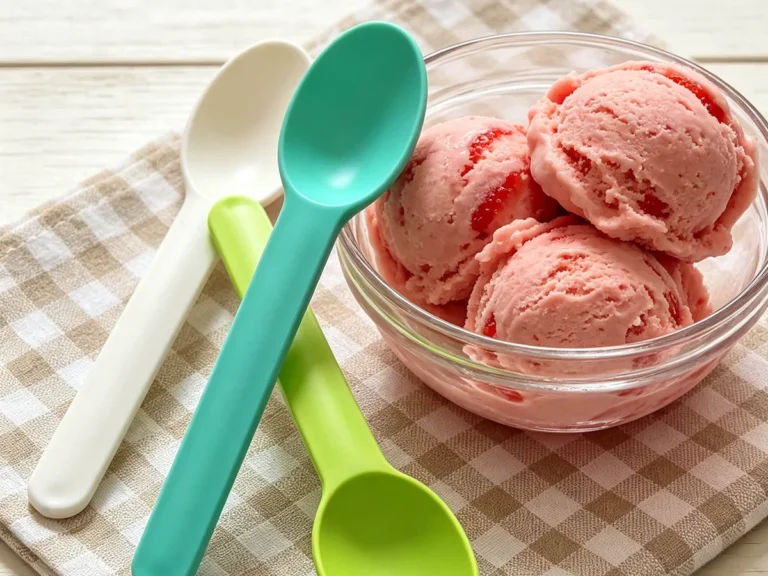
- Spoon pairing: Select a spoon length and bowl shape comfortable for the cup’s depth; see our ice cream spoon range.
Do not use a packaging sample to assume food-contact compliance or guaranteed leakage performance. The appropriate documentation and technical checks depend on the finished product and destination market. Ask the supplier which supporting information applies to the specific item.
6. Wholesale Ice Cream Cup Sizes, Custom Printing and RFQ Preparation
Once you have approved the physical cup, bring your branding and procurement requirements into the same conversation. Jorange Packaging lists CMYK full-color printing and a 5,000-piece minimum order for custom printed paper ice cream cups. These are product-page references; final availability and order terms still need confirmation.
Prepare artwork against the exact chosen model. Print layout, seam location, safe margins, and color appearance may vary with the cup structure and material. Ask for the model-specific template or dieline, check the artwork proof, and do not approve bulk production until the size and printed appearance are agreed.
- Selected model code or shortlisted cup sizes (for example, 160, 240 and 300).
- Intended dessert type, portion target and whether lids are required.
- Expected quantity for each model and preferred packing method.
- Logo, CMYK artwork or color references, with any printing constraints.
- Destination country, delivery requirements and preferred schedule.
- Sample approval requirements and documents requested for the destination market.
Buyers often receive vague or incomparable quotes because a request says only “8 oz custom paper ice cream cups.” More accurate sourcing begins with a cup model, actual dimensions, artwork expectations and quantities. For the full product range and available size chart, visit custom ice cream cups.
7. Think About Serving Cost, Not Just Cup Price
A smaller cup is not automatically more economical. It might reduce packaging volume but make your signature dessert look crowded, while an oversized cup can increase the packaging cost and make a controlled portion seem small. Compare the total cost per served item instead of asking for the cheapest unit price alone.
Include the cup, optional lid, spoon, any sleeve or bag, printing setup where applicable, freight and your real portioning workflow. If the wrong shape causes staff to re-serve spilled orders, the savings from a slightly lower cup price may disappear. Customer experience and reliable operations should be evaluated alongside unit cost.
Simple purchasing rule: Start with two or three cup models, test them against the same menu item, then compare the resulting serving presentation and total packaging cost. Approve the winner before committing to a custom-printed production order.
8. Frequently Asked Questions About Ice Cream Cup Sizes
What are the common ice cream cup sizes in ml?
Paper dessert cup lines may include compact 80, 120 and 160 ml models, medium formats such as 240 and 300 ml, and larger options such as 380 ml. Exact available capacities and dimensions depend on the specific supplier model.
How many scoops fit in a 120 ml ice cream cup?
There is no universal scoop count for a 120 ml cup. Scoop size, dessert density, serving technique and toppings vary. Test your standard portion in the actual cup and allow enough room for convenient handling.
Is a 240 ml cup always an 8 oz ice cream cup?
A supplier may list 240 ml as an 8 oz reference, but the values are not necessarily exact conversions. Ask how the manufacturer defines capacity and verify the selected model’s practical fill level.
Should I choose a wide or tall paper gelato cup?
A wider cup can create surface area for toppings, while a taller cup changes how a portion sits and how a spoon reaches it. Compare physical samples and check stability, presentation and lid compatibility for your menu.
Are paper ice cream cups automatically suitable for all desserts?
No. Suitability depends on the product construction, dessert type, contact conditions and destination-market requirements. Confirm food-contact documentation and performance expectations for the specific cup before ordering.
Can Jorange Packaging print my logo on ice cream cups?
Jorange Packaging offers custom printed paper ice cream cups with CMYK printing options. Share the chosen cup model, artwork and order quantity for review and approval of the relevant print layout.
What is the custom printed ice cream cup MOQ?
The current product page states a 5,000-piece minimum for custom printed paper ice cream cups. Confirm the exact minimum by size and artwork when requesting your quotation.
Find Ice Cream Cup Sizes That Fit Your Menu
Tell Jorange Packaging your actual serving style, preferred cup models, lid requirements, quantities and printing needs. We can discuss available samples and a wholesale quotation before you finalize your order.
Request a Custom Quote Explore Ice Cream Cup Models →Reference note: Product specifications and MOQ mentioned here are based on Jorange Packaging’s published ice cream cup page, reviewed October 2026. Real fill volume, print layout, available lids and final purchasing conditions must be checked against the selected model and approved samples.